
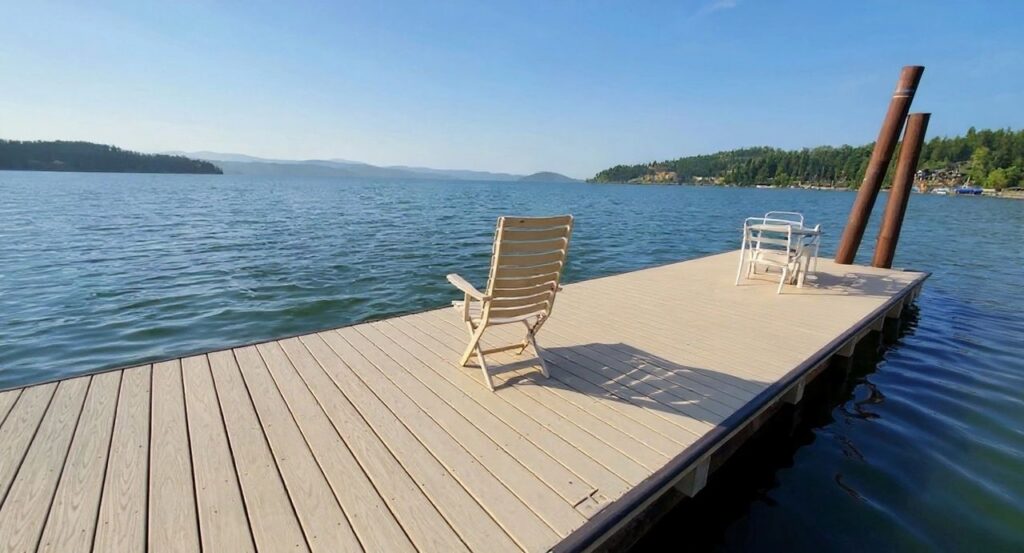
As a dock owner preparing to redeck your structure, selecting the right dock decking material is a critical decisions you will make. Docks face constant exposure to moisture, sunlight, temperature fluctuations, and foot traffic in potentially harsh waterfront conditions. The ideal decking is a trade off between lower up front cost materials, often with higher maintenance, Vs the more technology robust materials that deliver long-term durability, minimal maintenance, and reliable performance without warping, rotting, or becoming slippery when wet. At CDA Dock, we understand these unique demands and offer a full range of solutions. This guide provides a clear, side-by-side comparison of the five primary categories available today—natural wood (cedar), traditional composite, mineral-based composite, PVC, and fiberglass-reinforced—to help you choose the option best suited to your budget, aesthetic preferences, and environmental needs.
A Brief History of Decking Materials and Technological Advances
Natural wood decking has been the standard for centuries, prized for its classic appearance and availability. However, its vulnerability to moisture, insects, and decay led to the development of lower-maintenance alternatives. In the mid-1990s, traditional wood-plastic composite decking emerged, pioneered by brands such as Trex (1996) and TimberTech (1997). These products combined recycled wood fibers with plastic to create a more durable, rot-resistant material while reducing landfill waste. Early versions improved upon wood but still faced challenges with fading, mold, and thermal expansion.
Technological progress accelerated in the 2000s and 2010s. Capping technology (a protective polymer shell applied to all four sides) dramatically enhanced moisture and fade resistance. Around 2005, full-synthetic PVC decking entered the market, eliminating organic wood fibers entirely for superior waterproof performance. More recently, mineral-based composites replaced wood fibers with inorganic minerals for even greater stability and strength-to-weight ratios. Fiberglass-reinforced technology, incorporating advanced glass fibers (such as Owens Corning Advantex®), now delivers structural strength and underwater-rated durability without any wood content. These innovations have transformed dock decking from a high-maintenance necessity into a long-lasting, low-upkeep investment.
Summary of Each Decking Technology
Natural Wood/Cedar Decking Cedar remains a timeless choice that offers authentic grain and natural beauty. It is lightweight when dry and provides a warm, traditional look many dock owners prefer. However, it requires regular sealing, staining, and maintenance to combat rot, splinters, warping, and insect damage—particularly challenging in constant wet dock environments.
Traditional Composite Decking (Trex and TimberTech)These capped wood-plastic composites blend recycled wood fibers with plastic for realistic wood aesthetics and significantly reduced upkeep compared to natural wood. They resist rotting and mold far better than cedar and are suitable for waterfront installations. Full four-side capping (a key advancement) protects against moisture and fading, though they can become slick when wet and still absorb some moisture over time.
Mineral-Based Composite Decking (Deckorators)Utilizing proprietary Surestone® technology, Deckorators combines minerals with polymers to create a wood-free board that is exceptionally stable. It offers complete moisture resistance, minimal thermal movement, and a lightweight profile ideal for docks. Superior traction when wet and longer span capabilities reduce substructure requirements, making it an excellent mid-to-high-end choice for coastal or high-moisture applications.
PVC Decking (Premium Fiberon)Fiberon’s premium PVC line is 100% synthetic with no organic material, delivering inherent resistance to water absorption, mold, and mildew. Four-side capping and a Quick-Cool Core keep it comfortable underfoot even in direct sun. It is approved for freshwater, saltwater, and chlorinated environments—including temporary submersion—making it one of the most dock-friendly options available. Slip-resistant textures and high flexural strength add safety and longevity.
Fiberglass-Reinforced Decking (WearDeck)WearDeck integrates HDPE with Owens Corning Advantex® Fiberglas™ reinforcement for a completely wood-free, structurally robust board. It is rated for ground contact and underwater use, providing exceptional resistance to rot, pests, and the elements. Heat-reflective technology, slip-resistant surfaces, and easy installation (like wood) combine with a lifetime residential warranty for unmatched peace of mind in demanding dock settings.
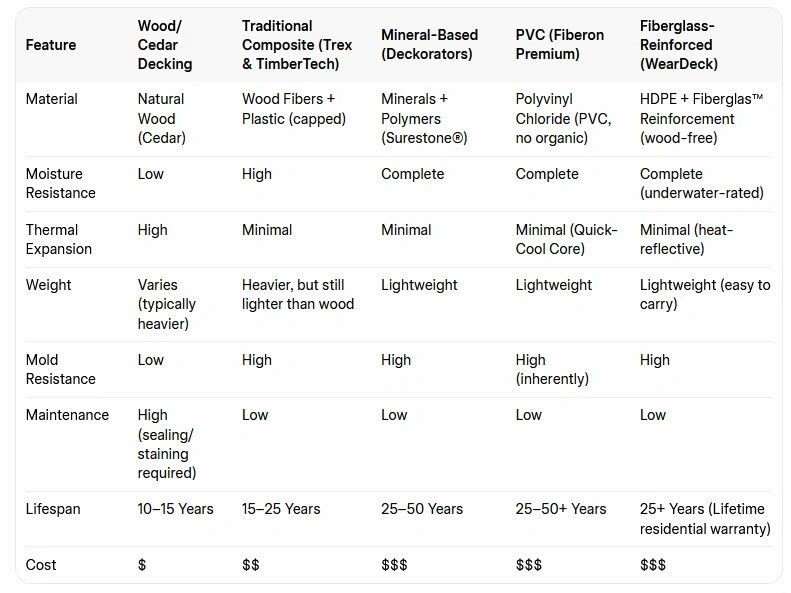
Apple-to-Apple Comparison Chart
The table below provides side by side comparison of each of the decking technologies, incorporating all five categories with data drawn directly from manufacturer specifications and performance in dock environments.
Making the Right Choice for Your Dock
Every dock project is unique. Some owners value the classic look and lower upfront cost of cedar, while others prioritize decades of virtually maintenance-free performance with advanced materials. Regardless of whether you lean toward traditional, mid-range, or premium high-tech solutions, Coeur d’ Alene Dock www.cdadock.com is fully equipped to support your vision. We install the complete lineup—Wood/Cedar, Trex, TimberTech, Deckorators, Fiberon, and WearDeck.
Our team will assess your dock’s specific conditions, budget, and design goals to recommend the optimal material and handle the entire installation with professional craftsmanship. We are committed to delivering the exact solution you want, from high-tech durability to timeless natural beauty.
We hope this detailed comparison has clarified the benefits, and key differences among today’s decking options and provided the insights you need to move forward with confidence. Contact Coeur d’ Alene Dock 208-691-9999 today to schedule a free consultation or request samples. Let us help you create a safe, beautiful, and long-lasting dock you will enjoy for decades to come.